
Laser mole removal treatment is one of the most requested cosmetic skin procedures today. Many people want to remove unwanted moles for aesthetic reasons, while others feel discomfort from moles that rub against clothing or jewelry.
So what is laser mole removal treatment?
Laser mole removal treatment uses focused laser energy to break down pigment cells inside a mole, allowing the body to naturally clear the tissue over time. It works best for small, benign, superficial moles and usually leaves minimal scarring when performed correctly.
Let’s discover everything about scarless mole removal treatment, including how it works, who qualifies, recovery time, risks, cost, and how it compares to surgical removal.
What Is Laser Mole Removal Treatment?
Scarless mole removal treatment is a non-invasive cosmetic procedure that uses high-energy light beams to target pigmented mole cells.
The laser penetrates the skin and heats the pigment inside the mole, breaking it down without cutting the surrounding skin.

Unlike surgical excision, laser mole removal treatment does not involve stitches. Instead, the laser vaporizes or fragments the mole tissue, depending on the laser type and mole depth.
People usually choose laser mole removal treatment for:
- Cosmetic mole removal on the face
- Small benign moles
- Flat pigmented moles
- Moles that cause irritation
It’s important to understand that laser mole removal treatment is designed for cosmetic concerns. Suspicious moles that require biopsy usually need surgical removal instead.
How Laser Mole Removal Treatment Works
Mole removal treatment works by targeting melanin, the pigment responsible for mole color. The laser emits concentrated light energy that the pigmented cells absorb.
This energy converts into heat, which breaks down the mole tissue.
Your body then removes the damaged cells through its natural healing process.
Different lasers may be used in laser mole removal treatment:
CO2 Laser
This laser vaporizes tissue layer by layer. It works well for raised moles.
Erbium Laser
This laser removes thinner layers of skin with controlled precision.
Q-Switched Laser
This laser targets pigment specifically and works best for flat pigmented moles.
Laser mole removal works best for superficial moles. Deep-rooted moles may not respond fully and could require surgical removal.
Types of Moles Suitable for Laser Mole Removal Treatment
Not every mole qualifies for scar-free mole removal treatment. A professional evaluation is necessary.

Laser mole removal works best for:
- Small benign moles
- Flat brown moles
- Non-cancerous pigmented lesions
- Cosmetic facial moles
Laser mole removal treatment may not be ideal for:
- Large raised moles
- Suspicious or irregular moles
- Deep dermal moles
- Moles requiring pathology testing
Dermatologists use the ABCDE rule to identify suspicious moles:
- Asymmetry
- Border irregularity
- Color variation
- Diameter larger than 6mm
- Evolving shape
If a mole shows warning signs, surgical removal is safer because it allows biopsy testing.
Laser Mole Removal Treatment Procedure
Here is what typically happens during laser mole removal treatment.
Step 1 Consultation
The provider examines the mole using visual inspection or dermoscopy. They confirm that the mole is benign and suitable for laser treatment.
Step 2 Skin Preparation
The area is cleaned thoroughly. A local anesthetic may be applied to reduce discomfort.
Step 3 Laser Application
The laser targets the mole directly. You may feel brief warmth or snapping sensations. The laser energy breaks down the mole tissue.
Step 4 Post-Treatment Care
The provider applies soothing ointment and sometimes a small dressing. The procedure usually takes 15 to 30 minutes.
Mole removal typically requires only one session for small moles, but some moles may need additional sessions.
Does Laser Mole Removal Treatment Hurt
Laser mole removal is generally well tolerated. Most clinics apply numbing cream or local anesthesia before treatment.
Patients usually describe the sensation as:
- Mild stinging
- Warm snapping feeling
- Brief heat pulses
Discomfort stops once the laser session ends.
Recovery Timeline After Laser Mole Removal Treatment
Recovery from mole removal treatment is relatively quick compared to surgery.
First 24 Hours
The treated area may appear red and slightly swollen.
Days 2 to 5
A small scab may form over the treated mole.
Week 1
The scab naturally falls off. New pink skin appears underneath.
Weeks 2 to 4
The area gradually fades and blends with surrounding skin.
Makeup is usually allowed after the scab falls off. Avoid sun exposure during healing.
Before and After Results of Laser Mole Removal Treatment
Mole removal treatment offers noticeable cosmetic improvement. After healing, the mole usually disappears or becomes significantly lighter.


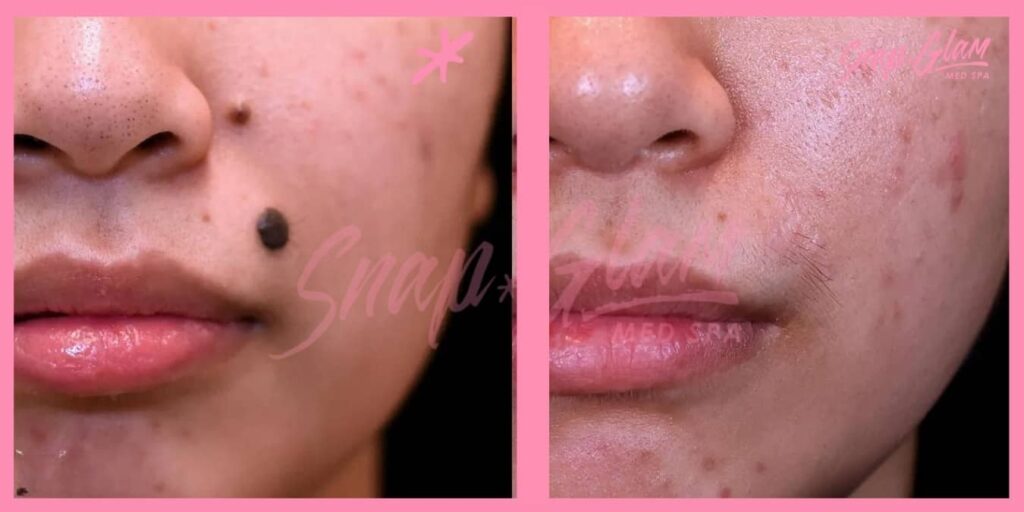
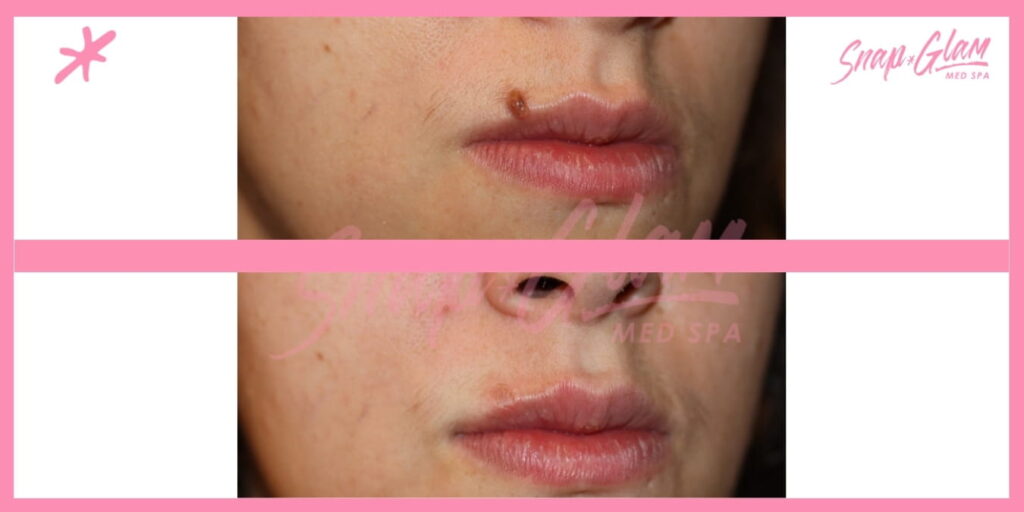
However, realistic expectations matter.
Possible outcomes include:
- Clear skin with minimal scarring
- Slight pink discoloration during healing
- Mild pigmentation changes
Recurrence can happen if some mole cells remain. Deep moles carry a higher chance of returning.
Risks and Side Effects of Laser Mole Removal Treatment
Laser mole removal is considered safe when performed correctly. However, every cosmetic procedure carries some risks.
Possible side effects include:
- Redness
- Swelling
- Mild pain
- Temporary pigmentation changes
- Infection if aftercare is ignored
- Rare scarring
Laser treatment does not allow tissue biopsy. That is why suspicious moles should never be treated with laser alone.
Laser Mole Removal Treatment vs Surgical Excision
Here is a helpful comparison:
| Feature | Laser Mole Removal Treatment | Surgical Excision |
| Stitches | No | Yes |
| Biopsy possible | No | Yes |
| Downtime | Minimal | Moderate |
| Scar risk | Low for small moles | Slightly higher |
| Best for | Cosmetic removal | Suspicious moles |
Laser mole removal treatment works best for cosmetic concerns. Surgical removal works best for medical evaluation.
How Much Does Laser Mole Removal Treatment Cost
Laser mole removal treatment cost varies based on:
- Mole size
- Mole location
- Number of moles
- Clinic location
- Provider expertise
Average laser mole removal treatment cost:
- Small mole: $150 to $400
- Medium mole: $300 to $600
- Multiple moles: $500 to $1,200
Facial moles may cost more due to precision requirements.
If biopsy is needed, surgical removal will increase the total cost.
Who Is a Good Candidate for Laser Mole Removal Treatment
You may qualify for laser mole removal treatment if:
- You have benign cosmetic moles
- You want minimal scarring
- You prefer non-surgical treatment
- You have flat pigmented moles
A professional consultation ensures safe selection.
Who Should Avoid Laser Mole Removal Treatment
Laser mole removal treatment may not be recommended for:
- Suspicious or irregular moles
- History of melanoma
- Keloid-prone individuals
- Deep or very large moles
In these cases, surgical excision is safer.
Frequently Asked Questions
Is Laser Mole Removal Treatment Permanent?
In most cases, yes. However, deep moles may partially return.
Does Laser Mole Removal Treatment Leave a Scar?
Small superficial moles usually heal with minimal scarring.
How Many Sessions Are Needed?
Most moles require one session. Some may need two.
Is Laser Mole Removal Treatment Safe on the Face?
Yes, when performed by experienced providers.
Can Raised Moles Be Removed With Laser?
Some raised moles can be treated, but deep ones may require surgery.
Final Thoughts
Laser mole removal treatment offers a safe, minimally invasive option for removing unwanted cosmetic moles. It works best for small benign lesions and provides faster healing compared to surgical methods.
Understanding the procedure, risks, recovery timeline, and cost helps you make an informed decision. Always consult an experienced professional to ensure the mole is suitable for laser treatment.
When performed correctly, mole removal treatment delivers smoother skin, improved confidence, and minimal downtime.
